When low water stops the Rhine boats
The Rhine is a working river that rises and falls with rain and snowmelt, and passenger boats feel it first. Most sailing days are normal. When the river runs very low or very high, though, a cruise can be cut short or canceled, and this guide shows how to plan around that.
A river that rises and falls
The Rhine covers roughly 1,230 km (765 miles) between its Alpine sources in Switzerland and the North Sea. Its level depends on rain across a huge basin plus snowmelt from the mountains, so it can swing a long way over a few weeks.
Most days that makes no difference to a visitor. Boats sail, the timetable holds, and the only sign is how much of the stony bank shows. Trouble comes only at the two extremes.
Low water, usually late in a dry summer
Low water usually arrives late in a dry summer and into autumn, after weeks without much rain and once the Alpine snow has gone. The channel gets shallower, and the narrow stretch around Kaub and the Loreley becomes the bottleneck.
Cargo ships then sail part-loaded to stay afloat. Passenger boats may skip shallow stretches or stop running, and some landing stages can become hard to use.
Autumn is also grape-harvest time, which makes it a popular time to visit. Our guide to the best months for a Rhine cruise weighs that risk against the wine festivals.
High water after heavy rain
High water comes after heavy rain or snowmelt, most often in winter and spring. The current speeds up, and riverside promenades in towns like Koblenz and Cologne can flood.
Boats also need room under the bridges. Above certain marks, shipping is usually halted on parts of the river until the level drops, which can take days.
The Kaub gauge
Kaub, the small town with the Pfalzgrafenstein toll castle on its island, has the gauge the shipping world usually watches. Its reading turns up in news about freight costs whenever the Rhine runs low.
The number is not the depth of the river. It is a reference figure and the channel is deeper, so a low reading that sounds alarming does not mean the river is nearly dry.
For a day trip you do not need to read gauges yourself. The operators decide whether a boat sails, and you hear about it from them or from the booking platform.
How each tour copes
The tours we compare react differently, and some listings say more than others. The table sums up what we know, with the regular price per person.
| Tour | From | Where | At extreme water levels |
|---|---|---|---|
| ETS Touristik, day from Frankfurt (our pick) | ~$167 | Rüdesheim to St. Goarshausen | A castle visit replaces the boat, per the listing, also on winter days without boats |
| Gilles Rheinschifffahrt, Koblenz | ~$21 | Koblenz, northern edge of the gorge | Usually sails in more conditions; check the listing |
| Bonner Personen Schiffahrt, Bonn to Linz | ~$30 | Bonn to Linz and back | Check the listing |
| KölnTourist, Cologne skyline | ~$27 | Cologne city | Usually sails in more conditions; check the listing |
| Go with Flo, private day | ~$142 | Rheingau and the gorge | Ask Florian about the cruise part |
Short city boats and the Koblenz loops usually keep sailing in more conditions than the long gorge routes. That is a general pattern rather than a promise, so read each listing's notes before you pay.
A longer boat further north
Bonner Personen Schiffahrt's four hours from Bonn to Linz, from ~$30, stays on the river below the gorge, past the Siebengebirge and Remagen. It rates 4.5 from 550+ reviews on GetYourGuide, though only 3.7 from 9 on Viator.
The boat has covered seating and air conditioning, according to Viator, which helps on a hot late-summer day. Its weak point is the view, which is green hills and towns instead of the castle gorge.
Four hours on the Bonn stretch
Bonner Personen Schiffahrt's round trip from the Alter Zoll in Bonn to Linz, with covered seats and the Siebengebirge on the way.
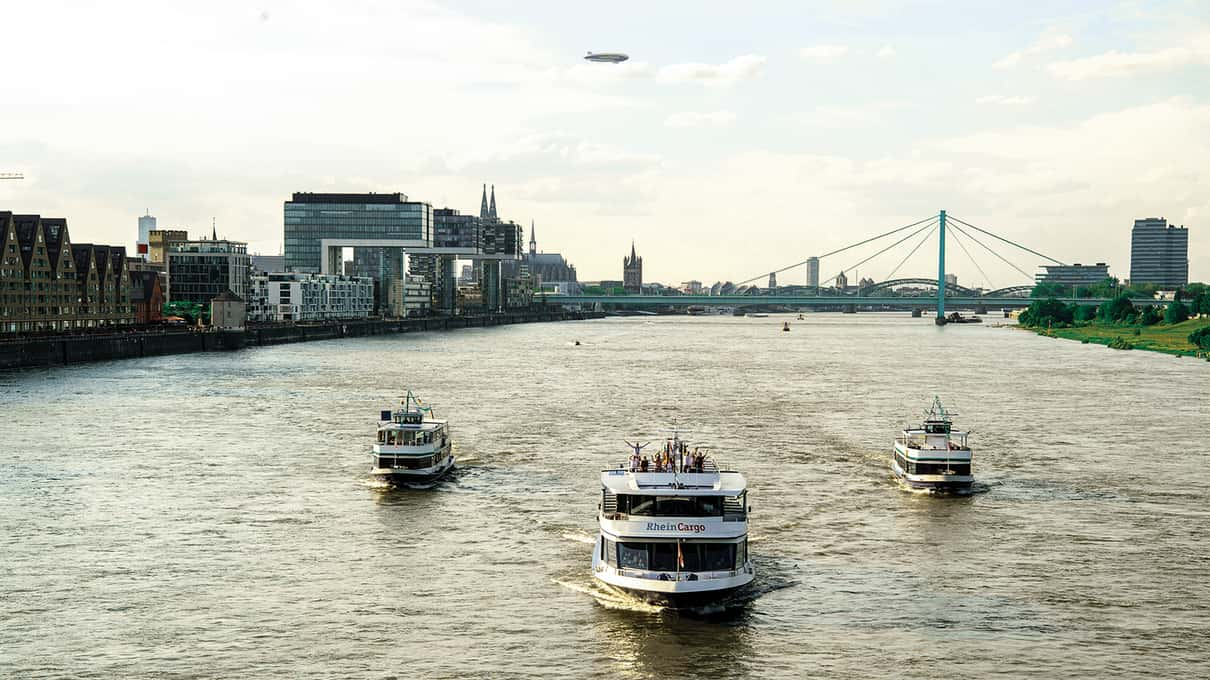
In Cologne, KölnTourist's one-hour cruise from ~$21 usually sails on most days, which makes it a decent fallback. The catch is an hour of city views around the cathedral, with no castles or vineyards. It holds 4.4 from 1,020+ reviews.
Booking around the river
Our pick, the ETS Touristik day from Frankfurt, can be cancelled for free until 24 hours ahead on GetYourGuide. For the other tours, check the listing's cancellation terms before you pay.
Read the operator's notes and your booking messages the day before. If the news shows a long dry spell or heavy rain upstream, look up the Rhine level and decide before the free-cancellation window closes.
On the Frankfurt day the swap to a castle visit happens on the tour itself, so you still get lunch and the wine tasting. Our Frankfurt guide shows where the boat fits in the day.
A plan B on the riverbank
If the boats are not running, regional trains follow both banks through the gorge, and the window views come close to the ones from the deck. Sit on the river side and you will pass many of the castles in our list.
A castle visit is the other easy swap. Marksburg above Braubach and Rheinfels at St. Goar can both be reached from the river towns, and our Loreley guide covers the viewpoint above the rock.
If you are still choosing between a day boat and a long river cruise, low water can hit both. Our comparison of a two-hour boat and a week-long cruise explains the difference, and the price guide lists all seven tours.